



The mid-range GPU landscape in 2026 is all about efficiency, modern features, and the never-ending fight for the best price-to-performance ratio. In that segment the RTX 4060 has shifted role: once the default 1080p pick, it’s now the value choice, sitting below NVIDIA’s newer Blackwell RTX 5060. With Ada Lovelace, DLSS Frame Generation, and genuinely impressive efficiency, it still hits a sensible balance of performance and price — provided you can buy it for meaningfully less than the 5060. This review covers where it lands today, how it compares to the current generation, and who should still buy one.
NVIDIA GeForce RTX 4060 Overview
The NVIDIA GeForce RTX 4060 brings Ada Lovelace to the mid-range and targets gamers who want maximum efficiency and modern features. DLSS 3 with Frame Generation, advanced Ray Tracing, and NVIDIA’s current encoders ensure that the card remains a well-rounded choice even in 2026. Those looking for RTX 4060 benchmarks, practical feedback, and sensible settings will find the most important answers compactly summarised here.
The RTX 4060 is aimed at ambitious 1080p gamers who appreciate high frame rates in AAA titles and target triple-digit FPS in e-sports games. It positions itself as a smart sweet spot: enough performance for current titles, strong AI features for better image quality, and noticeably lower latencies with NVIDIA Reflex. TechSpot benchmarks made it clear that the card outperforms the RX 7600 at 1080p with ray tracing, clearly defining its target audience.
Since its launch, the NVIDIA GeForce RTX 4060 has been widely available and found in many systems, from classic desktop PCs to compact mini form factors. For buyers, this means solid driver maturity, stable tools, and a broad ecosystem of accessories.
RTX 4060 Specs at a Glance
| Specification | RTX 4060 |
|---|---|
| Architecture | Ada Lovelace (TSMC 4N, 4nm-class) |
| CUDA Cores | 3,072 |
| VRAM | 8 GB GDDR6 |
| Memory Bus / Bandwidth | 128-bit / ~272 GB/s |
| Boost Clock | Up to ~2.46 GHz |
| TGP | 115 W |
| Upscaling | DLSS 4 Super Resolution + DLSS 3 Frame Generation |
| Encoding | AV1 (8th-gen NVENC) |
| Interface | PCIe 4.0 |
RTX 4060 Technical Specifications
Ada Lovelace Architecture (4nm)
Ada Lovelace stands for efficiency and feature depth. The 4nm manufacturing process enables high performance per watt, while 3rd generation ray tracing and DLSS 3 with Frame Generation provide visibly more headroom in practice.
8GB GDDR6 VRAM and 128-bit Interface
8GB GDDR6 on a 128-bit interface forms the memory sweet spot for 1080p. In memory-hungry titles like The Last of Us Part I or Hogwarts Legacy, however, it becomes apparent that 8GB on a 128-bit interface can mark the upper limit. Here, adjusted presets or DLSS help keep frame times stable.
CUDA Cores, RT Cores and Connections
Current CUDA and RT cores ensure swift raster performance and convincing ray tracing. In addition, there are modern display outputs for high refresh rates as well as AV1 encoding, which significantly improves streaming and recording.
A Note on DLSS 4
One thing to clear up for 2026: the RTX 4060 isn’t stuck in the past on upscaling. NVIDIA’s DLSS 4 Super Resolution (the newer transformer model) runs on all RTX cards, the 4060 included, so you get the improved image quality. The one DLSS 4 feature it doesn’t get is Multi Frame Generation, which stays exclusive to the RTX 50 series. The 4060 still has standard (single-frame) Frame Generation.
RTX 4060 Gaming Performance
The gaming performance of a graphics card cannot be evaluated solely through synthetic benchmarks – what matters is practical usability across various game genres and resolutions. The RTX 4060 positions itself as a versatile 1080p solution with solid ambitions for 1440p, but how does it actually perform in current AAA blockbusters and competitive esports titles? Our comprehensive tests cover both classic raster performance and modern features like ray tracing and DLSS 3.
1080p Gaming Benchmarks

- AAA Game Performance and FPS Values: In contemporary AAA games, the RTX 4060 achieves smooth frame rates at 1080p with high presets. E-sports titles typically sit in the triple-digit range, while story-driven blockbusters are clearly above the 60 FPS mark, depending on graphics level. Those who specifically adjust a few sliders can extract noticeably more reserves. In independent benchmarks, the RTX 4060 achieves around 20 per cent more FPS than the RX 7600 in Cyberpunk 2077 with ray tracing and DLSS enabled, underlining its advantage in AI features.
- Ray Tracing Gaming Performance: With ray tracing enabled, 1080p remains the comfort zone. In many games, a mix of RT effects, DLSS Quality, and slightly reduced shadows is a good formula for stable frame rates with very good visuals.
- DLSS 3 Frame Generation: DLSS 3 significantly elevates perceived smoothness. Frame Generation can make the difference, especially in graphically demanding scenes, without diluting the visuals. For single-player experiences, this is a real bonus; in competitive environments, the decision is situational.
1440p Gaming Test
- Performance at Higher Resolutions: At 1440p, gaming works very well with thoughtful settings, especially when DLSS is supported in Quality or Balanced mode. Titles with extreme RT effects benefit additionally from balanced presets. At 1440p Ultra presets, 1% low values can drop in memory-intensive scenes. Combined with DLSS, however, average FPS remains in the playable range, as tests from Notebookcheck show.
- Optimal Gaming Settings: A pragmatic mix is recommended: high textures, medium to high for shadows and post-processing, DLSS on Quality, Reflex active. This keeps image quality strong while input latency remains low.
RTX 4060 in Direct Comparison: Competitiveness and Market Positioning
The RTX 4060 operates in a fiercely contested segment where each generation brings new challenges. To understand the true strength of this mid-range GPU, a direct comparison with the main competitors is essential. It quickly becomes clear: pure benchmark numbers tell only half the story – features, efficiency, and future-proofing play an equally crucial role in the purchase decision.
| Comparison | vs RTX 5060 | vs RTX 3060 | vs RX 7600 | vs RTX 4070 |
|---|---|---|---|---|
| Performance | 5060 ~20–28% faster at 1080p, more with RT | More FPS, Frame Gen | Similar at 1080p, better with RT/DLSS | 4070 clearly faster at 1440p |
| Efficiency | 4060 wins (115 W vs ~145 W) | ~+25% per watt | 4060 more efficient | 4060 more efficient |
| Features | 5060 adds DLSS 4 Multi Frame Gen; both 8 GB | Ada, DLSS, RT | Edge with RT & DLSS | 12 GB VRAM |
| Target | 1080p high-refresh | 1080p | 1080p with RT | 1440p |
| Verdict | New buyers: 5060. 4060 if clearly cheaper | Upgrade for 1080p | Budget with DLSS/RT | Future-proof 1440p |
RTX 4060 vs RTX 5060
The RTX 5060 is the Blackwell successor, and in raw terms it’s roughly 20–28% faster than the 4060 at 1080p, with the gap widening in ray-traced titles. It swaps GDDR6 for much faster GDDR7 (which reduces the stutter the 4060 can hit in memory-heavy games), and it exclusively supports DLSS 4 Multi Frame Generation, which can generate up to three AI frames per rendered frame — a real advantage on a 1080p 144Hz or 165Hz monitor.
Two honest caveats keep the 4060 relevant. First, both cards share the same 8GB VRAM ceiling, so the 5060 doesn’t solve the long-term memory limit — it just handles pressure better. Second, the 4060 is the more efficient card (115 W vs ~145 W), which matters in compact and quiet builds.
So the practical advice: if you’re buying new and the prices are close, the RTX 5060 is the smarter pick for anyone keeping the card more than a year or two. The RTX 4060 is the right call when it’s genuinely cheaper, when efficiency and a small chassis are priorities, or when you’re on a stricter budget for focused 1080p gaming. And if you already own a 4060, upgrading to a 5060 usually isn’t worth the sell-and-rebuy cost — the ~22% jump only justifies itself if you’re changing resolution or hitting the VRAM wall.
RTX 4060 vs. RTX 3060
The RTX 4060 offers a clearly more modern feature base and noticeably better efficiency. Compared to the RTX 3060, Ada plus DLSS 3 provides more FPS headroom while simultaneously reducing power consumption per frame. According to measurements from IgorsLab, the performance increase per watt averages up to 25 per cent, making the card additionally attractive in compact systems.
RTX 4060 vs. AMD RX 7600
Both cards deliver convincing 1080p performance. The NVIDIA GeForce RTX 4060 scores with DLSS 3, mature ray tracing pipelines, and Reflex. In classic raster scenarios, both are closely matched, but with RT load and AI upscaling, the RTX 4060 has advantages in many cases. Without ray tracing, the RX 7600 can lead slightly in individual titles, but with RT and DLSS enabled, the picture clearly shifts in favour of the RTX 4060.
RTX 4060 vs. RTX 4070
Is the premium worth it?
The RTX 4070 is faster and offers more reserves for 1440p with high settings. However, those who primarily play at 1080p and are budget-conscious will find a more harmonious balance of price, performance, and efficiency in the RTX 4060.
Performance Delta and Purchase Recommendation
The delta to the RTX 4070 exists, but it isn’t always relevant when frame rate and visuals at 1080p are already in the desired range. Recommendation: RTX 4060 for focused 1080p gaming, RTX 4070 for ambitious 1440p target profile. Those who are committed to 1440p Ultra long-term will additionally benefit from the RTX 4070’s 12 GB VRAM, which opens up more reserves for textures and ray tracing.
RTX 4060 Power Consumption
In times of rising electricity prices and growing environmental awareness, a graphics card’s energy efficiency is becoming increasingly important. The RTX 4060 sets new standards in the mid-range and proves that modern performance doesn’t necessarily mean high power consumption. This characteristic plays to its full strengths, especially in compact gaming systems and Mini PCs.
115W TGP and Power Supply Requirements
With a TGP of 115W, the RTX 4060 remains frugal. A solid power supply with sufficient 12V performance and modern protection circuitry is still mandatory. In compact systems, the moderate heat output simplifies case and cooling planning. Compared to the AMD RX 7600 with around 165 watts, the consumption is significantly lower, making the card ideal for energy-efficient Mini PCs.
For system planning, this specifically means: A 550W power supply is already sufficient for a complete gaming system, while the low heat generation also enables passive or semi-passive cooling concepts. In Mini-ITX builds, this is a decisive advantage.
Energy Efficiency in Gaming
The card delivers strong performance in frame rates per watt. This pays off in daily use, whether during a long story session or an e-sports marathon. The Ada Lovelace architecture intelligently optimises consumption based on game requirements – in less demanding titles, power consumption automatically decreases without performance suffering.
Practically, this means: During a four-hour gaming session, the RTX 4060 consumes about 30% less power than comparable competing models. At current electricity prices, this is noticeable in the utility bill over the year, not to mention the reduced CO₂ footprint.
RTX 4060 Price & Value in Australia (2026)
Now that it’s the previous generation, the RTX 4060’s whole case rests on price. In Australia it typically sells around AUD $449–$519, below the RTX 5060 (from roughly AUD $549) and close to the Radeon RX 7600 (from about AUD $499). At that gap, the 4060 is a sensible 1080p buy — DLSS extends its useful life, Reflex cuts latency, and AV1 helps with content creation. If the 4060 and 5060 are ever priced close to each other, though, the newer card is the better long-term value. (Verify current pricing against live listings before publishing.)
Conclusion
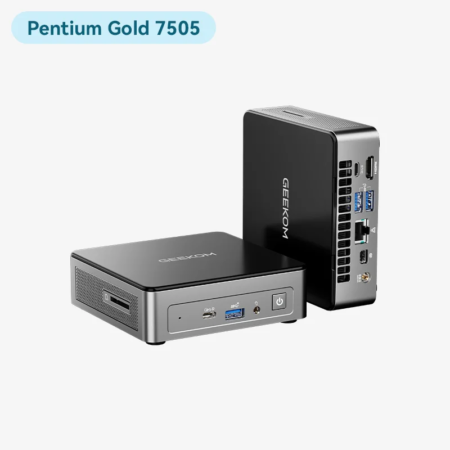
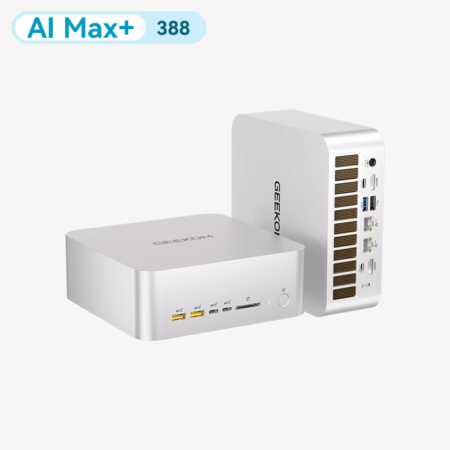
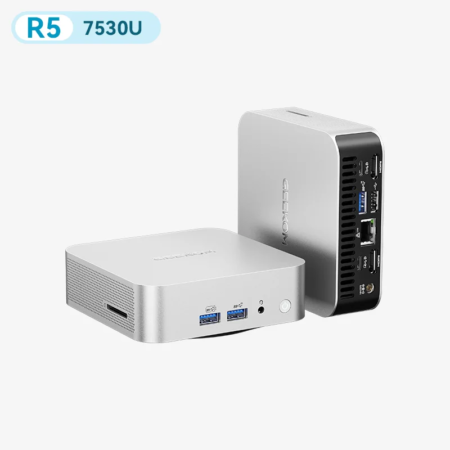
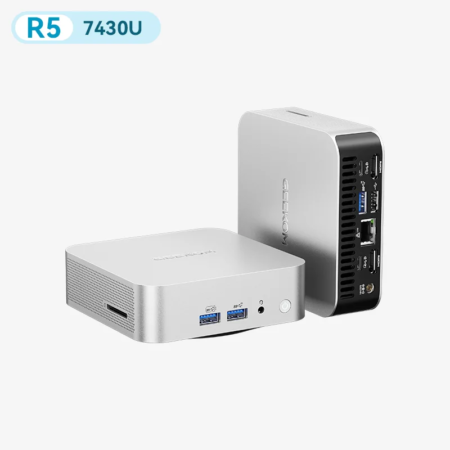
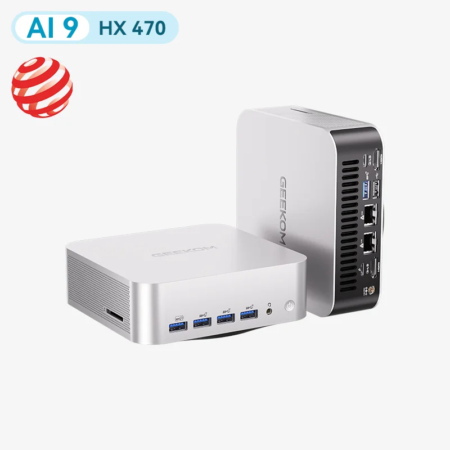
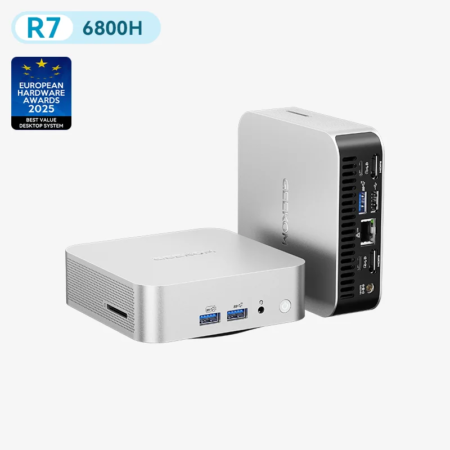
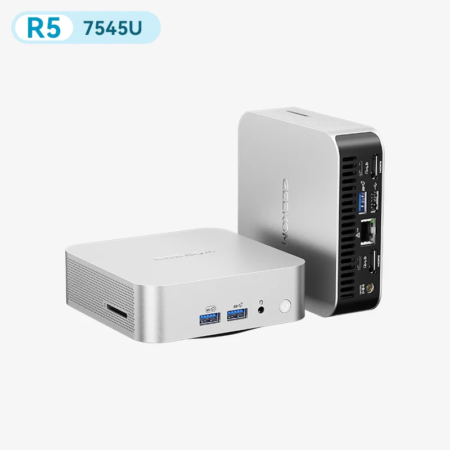
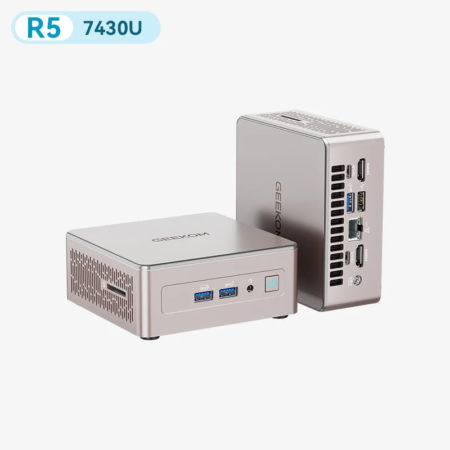
In 2026 the RTX 4060 is no longer the default 1080p card, but it’s still a smart value one. DLSS (now including DLSS 4 upscaling), ray tracing, Reflex, and class-leading efficiency make a well-rounded package that’s particularly convincing in small, quiet systems. The RTX 5060 is the faster, more future-ready choice for new buyers when prices are close — but when the 4060 is clearly cheaper, or when low power draw and a compact chassis matter most, it remains a genuinely sensible pick. Paired with a GEEKOM mini PC, it makes for a space-saving, quiet system that handles gaming, work, and creativity with ease.
FAQs
Should I buy the RTX 4060 or the RTX 5060 in 2026?
If you’re buying new and the prices are close, the RTX 5060 is generally the better choice — it’s about 20–28% faster, has faster GDDR7 memory, and exclusively supports DLSS 4 Multi Frame Generation. Choose the RTX 4060 when it’s meaningfully cheaper, when efficiency and a compact build matter, or for budget-focused 1080p gaming. If you already own a 4060, upgrading usually isn’t worth it.
Is the RTX 4060 still good?
Yes. For 1080p with high presets and modern features, the card is still highly recommended. DLSS 3 noticeably extends its useful lifespan.
Is 8GB VRAM enough for modern games?
For 1080p in most titles, yes. In very memory-intensive scenes, DLSS quality modes and targeted settings for textures and shadows help.
Does the RTX 4060 support DLSS 4?
It supports DLSS 4 Super Resolution (the improved upscaling), which runs on all RTX cards. It does not support DLSS 4 Multi Frame Generation — that’s exclusive to the RTX 50 series. The 4060 does have standard single-frame Frame Generation.